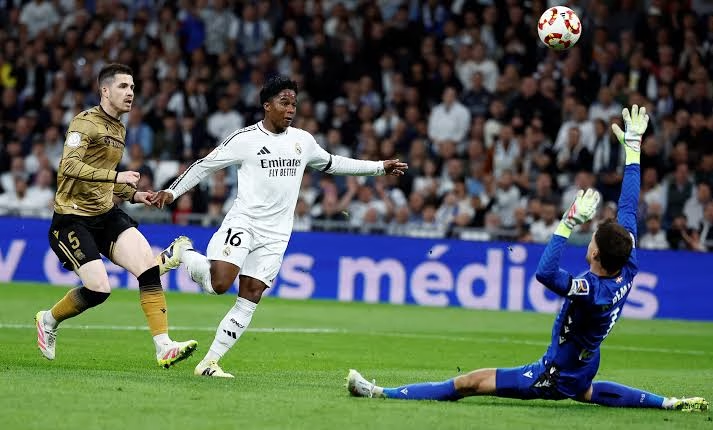
What “Player Shots on Goal 5+ (incl. overtime)” Means
- Player = a single footballer you’re betting on (e.g., Erling Haaland).
- Shots on Goal = attempts that would have gone into the net if not stopped by the goalkeeper or the woodwork (this excludes blocked shots off-target).
- 5+ = the player must register at least 5 shots on target in the match (5 or more).
- (incl. overtime) = if the match goes into extra time (like in a cup game), those shots on target during extra time count toward the total. (Penalties in a shootout don’t count).
Key difference from normal shots:
“Shots on goal” ≠ “Shots” — A player may have 8 shots but only 3 on target. The bet specifically counts shots that test the goalkeeper or go into the net.
Team-Based Example
Let’s imagine Manchester City vs. Luton Town (FA Cup quarterfinal).
- You pick Erling Haaland – 5+ Shots on Goal (incl. OT)
- The match is expected to be one-sided. Manchester City will dominate possession.
Possible Scenario:
- Haaland has 3 shots on target in the first half.
- He adds 2 more in the second half.
- Total = 5 shots on target by full-time. Bet wins.
If after 90 minutes he has 4 shots on goal but gets subbed off and doesn’t play extra time, you lose.
If the match goes into extra time and he gets his 5th shot on goal then, it still counts.
Why This Market Exists
It’s a high-risk, high-reward bet.
Most players rarely hit 5+ shots on target in a single match — even strikers.
It usually happens when:
- A team heavily dominates a weaker opponent.
- The player is the main focal point of attack.
- The match has lots of scoring chances (e.g., cup games or high-scoring leagues).
Betting Tips
Research the Player’s Stats
Check average shots on target per match.
- For example, in 2023/24, Haaland averages ~1.8–2.5 shots on target per league match.
- Reaching 5+ would be exceptional, usually only against weak opposition.
Match Context Matters
- Look for cup games or matches vs low-tier opposition where elite forwards can rack up attempts.
- Home advantage often increases shooting numbers.
Consider Team Style
- Teams like Manchester City, Liverpool, PSG dominate possession and create lots of chances.
- If a striker plays for a counter-attacking team, even if he’s good, he’ll have fewer chances.
Monitor Line-ups
- Make sure the player is starting and likely to play most of the game. Substitutions ruin high-shot bets.
Use Stats Platforms
Websites like Sofascore, Whoscored, or Fotmob show historical “shots on target” numbers. Compare averages before placing the bet.
Alternative Markets
If 5+ is too high, consider “Player Shots on Target 2+ or 3+” — more realistic and often still gives decent odds.
Quick Example Table
| Player | Opponent | Typical Shots on Target (avg) | 5+ Shots on Target Chance |
|---|---|---|---|
| Haaland (Man City) | Luton (FA Cup) | 2.1 per match | Only if City dominate (rare but possible) |
| Mbappé (PSG) | Le Havre (Ligue 1) | 2.4 per match | Needs a big game to hit 5+ |
| Salah (Liverpool) | Sheffield Utd (EPL) | 1.9 per match | Unlikely but possible if 10+ shots total |
Bottom Line
“Player Shots on Goal 5+ (incl. overtime)” = betting that a single player records at least five on-target shots in a match including extra time.
It’s a long-shot, high-odds bet. Best used on top strikers against weak opposition, ideally in cup games or high-scoring teams. Always check the player’s average, the match context, and whether they’ll play the full match.
Would you like me to make a handy table for all “Player Shots on Goal” bets from 1+ to 5+ (with what’s realistic & tips for each)?