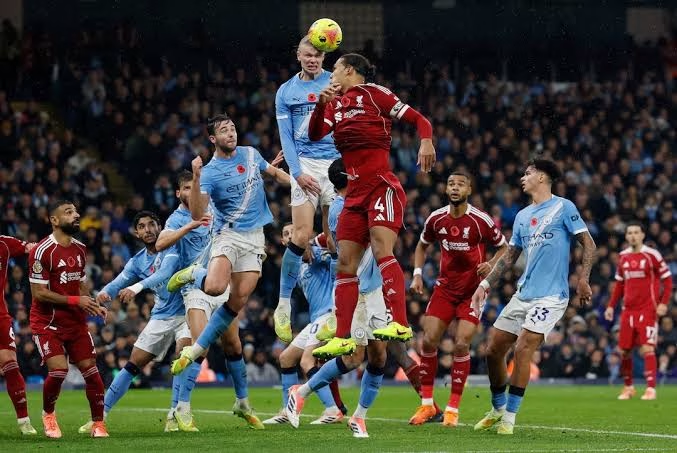
What Is “1st Own Goal” in Football Betting?
1st Own Goal is a betting market where you predict:
Which team will score the first own goal in a match.
An own goal occurs when a player accidentally puts the ball into their own net, giving the opponent a goal.
You can bet on:
- Team A to score the first own goal
- Team B to score the first own goal
- No Own Goal in the Match
How It Works
Example market:
| Option | Meaning |
|---|---|
| Team A – 1st Own Goal | Team A will be the first to score an own goal |
| Team B – 1st Own Goal | Team B will be the first to score an own goal |
| No Own Goal | Game finishes without any own goal |
A winning bet is determined the moment an own goal occurs.
Example With Real Teams
Let’s use a match:
Chelsea vs Manchester United
Possible outcomes:
Example 1: Chelsea scores the first own goal
In the 27th minute, Chelsea defender accidentally scores into his own net.
Winning bet: Chelsea – 1st Own Goal
Losing bets:
- Manchester United – 1st Own Goal
- No Own Goal
Example 2: Manchester United scores the first own goal
In the 72nd minute, a Manchester United player heads the ball into their own goal.
Winning bet: Manchester United – 1st Own Goal
Losing bets:
- Chelsea – 1st Own Goal
- No Own Goal
Example 3: No own goal occurs
The game ends 2–1; all goals scored normally.
winning bet: No Own Goal
Losing bets:
- Chelsea – 1st Own Goal
- Manchester United – 1st Own Goal
Important Rules
- Only official own goals count (as recorded by match officials).
- If no own goal happens → “No Own Goal” wins.
- If the match is abandoned after an own goal, the market usually stands.
- Extra time normally does not count (unless specified).
Probability & Reality
Own goals are rare.
On average:
- Only 1 in 10–12 matches has an own goal.
- Defensive errors and pressure situations increase chances.
Teams More Likely To Concede an Own Goal
Teams tend to concede more own goals when they:
- Defend deep under pressure
- Have inexperienced defenders
- Face strong attacking opponents
- Play high-intensity derbies
Examples:
- Smaller EPL teams vs big clubs (e.g., Luton vs Manchester City)
- Nervous derby games (e.g., Barcelona vs Real Madrid)
Smart Betting Tips for “1st Own Goal”
Here are useful betting strategies:
1. Consider “No Own Goal” as the safer option
Because own goals are rare,
“No Own Goal” wins most of the time.
2. Pick small teams facing high pressure
Example:
Brentford vs Liverpool – Brentford likely to defend deep → higher chance.
3. Look at teams with shaky defenders or constant back-passing
Teams with poor defensive lines are riskier.
Examples of risky teams (historically):
- Everton (defensive mistakes)
- Tottenham (high-press games)
- Crystal Palace
4. Derby matches increase own-goal risk
Derbies = more pressure = more mistakes.
Examples:
- Arsenal vs Tottenham
- AC Milan vs Inter
- Real Madrid vs Barcelona
5. In-play betting
If one team is dominating and pinning the other back:
The defending team becomes more likely to make an error → including own goal.
Simple Example: Predicting a 1st Own Goal
Match: Manchester City vs Wolves
- Manchester City dominates possession
- Wolves sit deep and defend constantly
- Wolves defenders often block crosses under pressure
Prediction:
Wolves – 1st Own Goal (if an own goal happens)
Final Summary
1st Own Goal = betting on which team will score the first own goal.
You can pick Team A, Team B, or No Own Goal
Own goals are rare → “No Own Goal” is usually safer
Pressure , weak defense, derbies, and domination increase own-goal chances
Leave a Reply