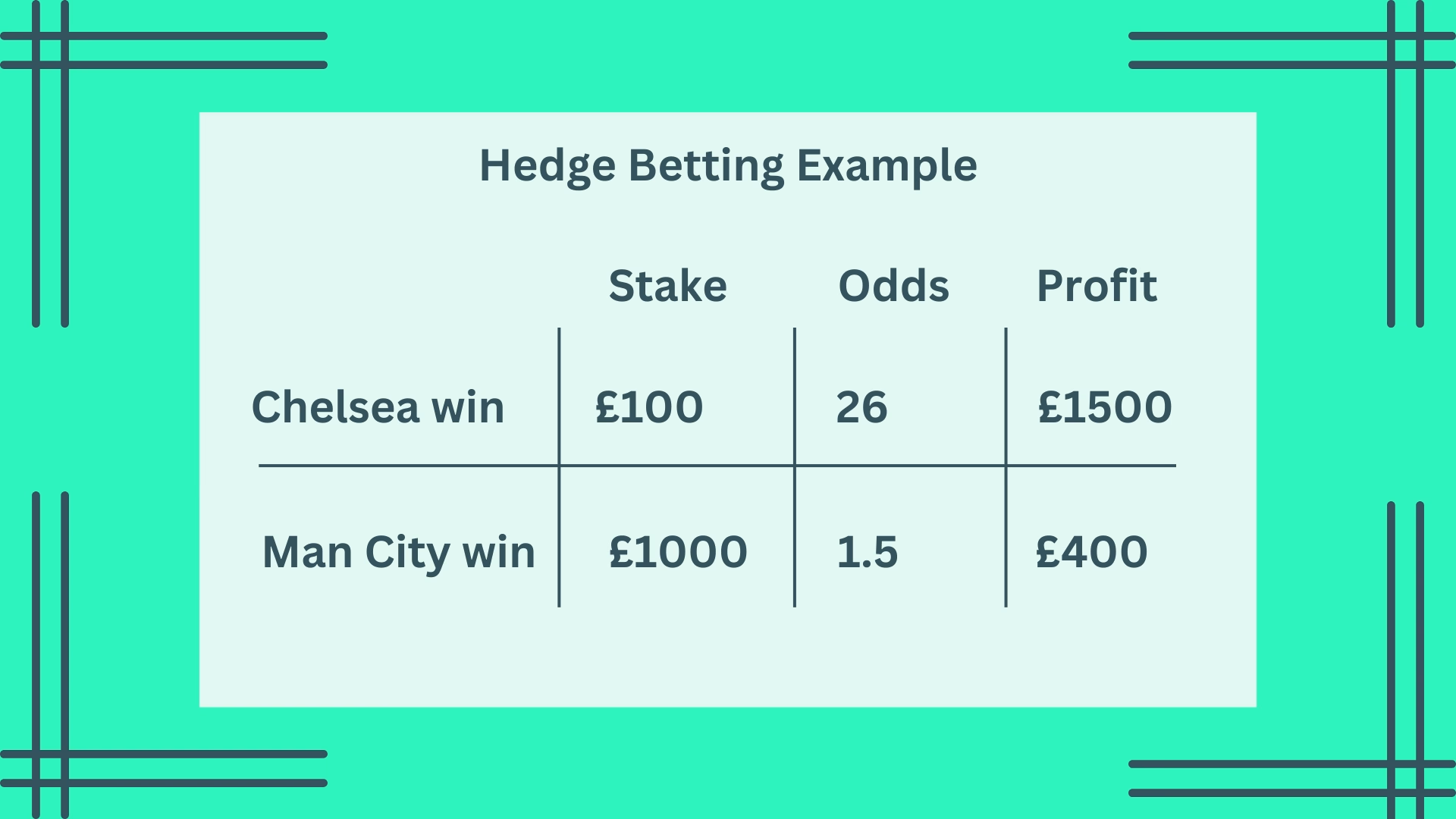
What Is Hedging in Sports Betting?
Hedging is a strategy used by bettors to reduce potential losses or secure guaranteed profit by placing additional bets that cover the opposite side of an existing wager.
It is similar to “insurance” in betting—when a bettor feels that a situation has changed, or wants to protect their stake or profit, they place another bet to balance risk.
How Hedging Works
When you hedge, you “balance” your initial bet by:
Placing a bet on the opposite outcome
Adjusting your potential loss or profit
Reducing risk when the situation changes (e.g., live betting odds shift)
Hedging can happen before the match or during live betting.
Why Bettors Hedge
Bettors hedge for these reasons:
- To lock in profit
- To reduce or eliminate risk
- To secure at least some return in case original prediction goes wrong
- To manage emotions and avoid losing full stake
- When odds change heavily in their favour
Types of Hedging
Profit-Locking Hedge
This is used when your original bet is likely to win, and you want to guarantee profit by covering the opposite side.
Loss-Reducing Hedge
Used when your initial bet is unlikely to win, but you want to recover part of your stake.
Live Betting Hedge
Used while the game is ongoing and odds shift dramatically.
Examples of Hedging in Sports Betting
Example 1: Locking in Profit in Football
You placed:
- ₦10,000 on Chelsea to win at 2.50 odds
Potential profit = ₦15,000 (₦25,000 payout)
Chelsea is leading 2–0 in the 70th minute.
Live odds change:
- Chelsea to win (live) = 1.10
- Arsenal to win or draw (Double Chance) = 7.00
To hedge:
You bet ₦3,000 on Arsenal/Draw at 7.00
Outcome Scenarios:
| Result | Original Bet | Hedge Bet | Final Profit |
|---|---|---|---|
| Chelsea wins | +₦15,000 | –₦3,000 | +₦12,000 |
| Arsenal equalizes/wins | –₦10,000 | +₦21,000 | +₦11,000 |
You win regardless.
Example 2: Reducing Loss
You bet:
- ₦20,000 on Over 2.5 goals at 1.80 odds
Score at halftime: 0–0
Live odds rise:
- Under 2.5 goals = 2.20
You hedge with ₦9,000 on Under 2.5 goals.
Outcome Scenarios:
| Result | Over 2.5 | Under 2.5 | Final Profit/Loss |
|---|---|---|---|
| 3+ goals | +₦16,000 | –₦9,000 | +₦7,000 |
| 0–2 goals | –₦20,000 | +₦19,800 | –₦200 |
You avoid losing ₦20,000 and only lose ₦200.
Example 3: Future Bet Hedge
You placed a futures bet:
- ₦5,000 on Man City to win Premier League at 4.00 odds
As the season nears the end:
Man City leads the table, but Arsenal is close.
Arsenal odds to win: 2.50
To hedge:
Bet ₦8,000 on Arsenal at 2.50
Now whichever team wins, you profit.
When to Hedge
Good times to hedge:
- Odds move strongly in your favour
- You feel unsafe about your original bet
- Late-game pressure changes momentum
- You have a big potential payout at risk
- You want to secure part of a winning accumulator
Not ideal to hedge:
- When hedging costs wipe out too much profit
- When odds are too close
- For small bets with low returns
Advantages of Hedging
Guarantee profit
Reduces risk
Helps manage emotions
Useful for accumulators
Work well with live betting
Disadvantages of Hedging
reduce potential maximum win
Require quick calculations
Depends on available odds
Not every game provides good hedging opportunities
Hedging Tips for Bettors
- Use hedging when odds drastically shift in your favour
- Calculate payouts before placing hedge
- Avoid over-hedging
- Use hedging with accumulators to protect large potential payouts
- Watch games live for the best opportunity
- Use betting apps’ live odds quickly
Leave a Reply